Growth in Automotive Aftermarket to Drive Market Demand

Credit: photoman / iStock via Getty Images Plus
By MarketsandMarkets
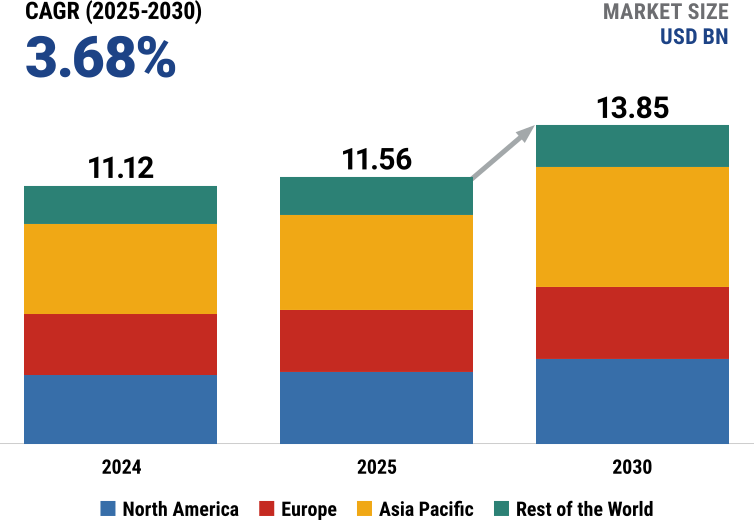
The automotive refinish coatings market is projected to reach USD 13.85 billion by 2030, up from USD 11.56 billion in 2025, reflecting a CAGR of 3.68% from 2025 to 2030. Automotive refinish coatings are specialized paint and coatings applied in nonproduction environments, such as auto body shops and repair facilities, to repair and refurbish automobiles and other vehicles. Market growth is driven by rising vehicle ownership, longer vehicle lifespans and an increased focus on aesthetics and maintenance, supporting expansion in both mature and emerging economies.
Figure 1. Automotive refinish coatings market size and share.
Source: MarketsandMarkets
Expanding Aftermarket Infrastructure Supports Refinish Coatings Growth
The increasing maturity and development of automotive aftermarket infrastructure worldwide have set favorable platforms for the expansion of automotive refinish coatings. With everything from tiered dealership service centers and authorized collision networks to independent garages and franchised repair chains, the appeal of an ever-accelerating number of standardized, quality-controlled repair outlets is strong when it comes to reaching the furthest corners of the product distribution landscape and achieving broader brand exposure. More specifically, these facilities utilize methods such as sophisticated inventory systems, digital procurement platforms and customer relationship management tools to support volume purchasing and consistent coating consumption.
The aftermarket is further defined by the rise of repair aggregators, such as online platforms that link vehicle owners with qualified workshops, which may recommend refinish brands as part of their service package. As a result, the robust aftermarket ecosystem acts as a demand stabilizer, supporting both volume and value growth across geographies.
Primer Demand Driven by Corrosion Protection Requirements
The primer segment was the third-largest segment in the global automotive refinish coatings market, in terms of value, in 2024. This positioning stems from the critical role primers play in corrosion protection. Refinishing processes often involve repairing scratched, dented or rusted panels where the metal substrate is exposed to environmental factors. Without proper surface sealing, these substrates are vulnerable to moisture, salt and chemical exposure, which can lead to corrosion and structural deterioration.
Primers serve as a protective barrier, shielding against oxidation and enhancing the overall durability of a vehicle’s body. In regions with high humidity, heavy rainfall or salt-treated roadways, corrosion risks are elevated, making the use of anti-corrosive primers particularly important. As a result, automotive repair shops place strong emphasis on these primers to preserve vehicle integrity and comply with OEM repair standards.
ADVERTISEMENT
Fast-Drying Resin Systems Gain Traction in Repair Applications
The other resin types segment is projected to be the third-fastest-growing segment in the automotive refinish coatings market during the forecast period. Growth in this category, which includes nitrocellulose and polyester resins, is driven by increasing demand for fast-drying formulations used in low-complexity automotive repair jobs.
Nitrocellulose resins are particularly valued for their rapid drying capabilities and suitability for quick refinishing processes, minor repairs or temporary touch-ups where curing speed is prioritized over long-term performance. In urban areas and high-traffic service centers, vehicle owners often request fast turnaround times for minor damage, scratches or localized repainting. These resin systems enable technicians to complete multiple jobs in short time frames.
Such formulations are also favored by small-scale operations and mobile repair units that may lack advanced curing equipment but still require consistent and reliable outcomes within limited working windows.
Passenger Vehicle Repairs Drive Market Value
The passenger cars segment led the automotive refinish coatings market, in terms of value, in 2024. This trend is largely driven by continued urbanization and the resulting growth in passenger vehicle ownership. As cities expand, vehicle density increases, exposing cars to higher risks of surface damage due to congested traffic, limited parking availability and deteriorating road conditions.
Passenger vehicles are particularly affected because of their widespread adoption and frequent exposure to crowded urban environments. In response, automotive aftermarket ecosystems, including refinish and repair shops, are expanding in both number and service capacity. This growth is especially pronounced in emerging economies, where increased infrastructure availability is helping reduce service costs and turnaround times for consumers.
At the same time, coating manufacturers are introducing urban-focused product developments, including low-VOC formulations, fast-drying coatings and compact application systems designed for smaller workspaces.
European Regulations Shape Formulation Trends
Europe accounted for the third-largest share of the automotive refinish coatings market, in terms of value, in 2024. This positioning is primarily driven by stringent environmental regulations implemented by the European Union and individual national governments, particularly those targeting air quality, hazardous substances and industrial emissions.
Regulatory frameworks such as REACH (Registration, Evaluation, Authorization and Restriction of Chemicals) and directives limiting volatile organic compound (VOC) emissions are accelerating the transition toward more sustainable coating technologies. This shift includes broader adoption of waterborne coatings, high-solids systems and low-VOC clearcoats.
Automotive refinish coating manufacturers in Europe are increasing investments in sustainable innovation to meet compliance requirements while maintaining performance standards. Concurrently, body shops and collision centers are upgrading operational practices to incorporate cleaner technologies, often supported by government subsidies and training programs.
Access the full report here.