

Sponsored article
Men Belong in the Room
Reflections from the Women in Chemicals Conference on leadership, allyship, and the role men can play in shaping the industry’s future
Credit: Women in Chemicals
By Towner Magill
Key Accounts Commercial Director for Brenntag and member of Women in Chemicals Ally Advisory Board based in Charleston, South Carolina
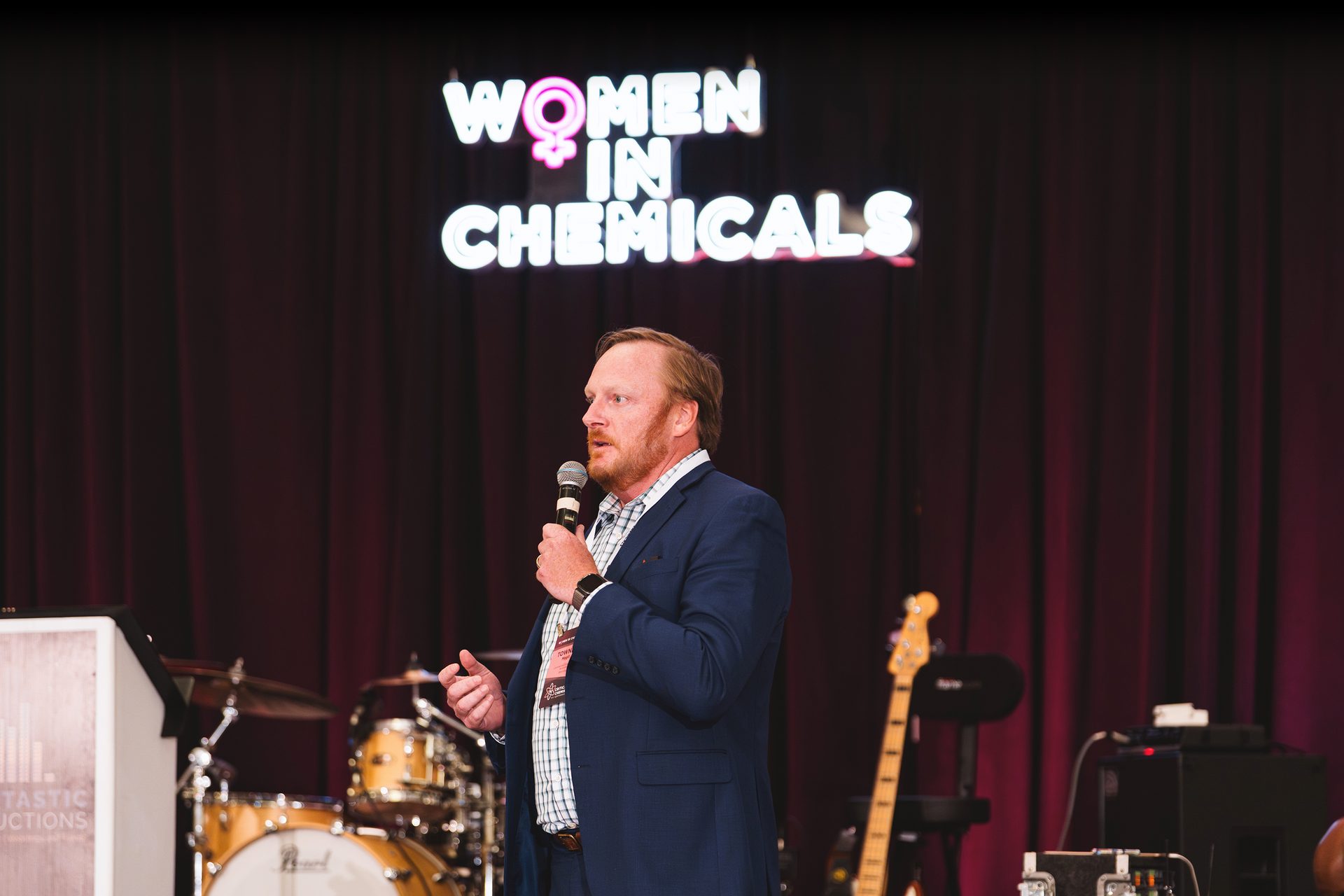
Walking into the Women in Chemicals Conference in Chicago last September, I understood that I was not necessarily the intended audience, but that I could play a role in the intended change. I knew the conference brought together hundreds of women across various backgrounds and experiences in the chemical industry to network, develop new skills, and collaborate. There were sessions on various topics including career planning, goal setting, and personal development, and this forum was a place for examining how leadership decisions, behaviors, and systems within our industry continue to shape who advances and who does not. Over the course of the conference, it became clear that being an ally is not a label or an intention. It is a leadership responsibility that requires listening, reflection, and action.
As a member of WIC’s Ally Advisory Board, I am always eager and excited to help amplify the impact the organization is having in the industry, and the annual conference is a tremendous opportunity to recognize and quantify that impact. What I wasn’t aware of previously were the numerous benefits to men in attendance as well. The benefits of allyship are apparent for the women we support, but men who intentionally choose to be allies also benefit from becoming better team members, managers, and leaders.
The Women in Chemicals Conference is unlike any other chemical conference I’ve ever attended. Not only are the attendees predominantly women, the programming is primarily focused on personal & professional development for the attendees. There were several sessions over the three-day event that helped shape my thinking as an industry leader. I’ve participated as a mentor in Women in Chemicals their last two mentorship cohorts so I was excited to share my own learnings and hear from others during the Mentorship Get-Together on the first day. Reflecting on the experiences of mine and other mentors' relationships, I recognized how I’ve become a more impactful and effective leader because of involvement in this extremely influential and beneficial program. Another extremely meaningful part of the program was listening to Lisa Sun, Founder & CEO of Gravitas. I didn’t expect to be especially engaged by the keynote, but Lisa’s insights on confidence gave me quite a bit to consider about my team and many of the female colleagues I work with on a regular basis. Her advice for attendees to focus on their superpowers in challenging times, and choosing confidence to drive changes in their behavior truly resonated with me. I have implemented Lisa’s teaching in how I both show up in my role and support the women I work with.
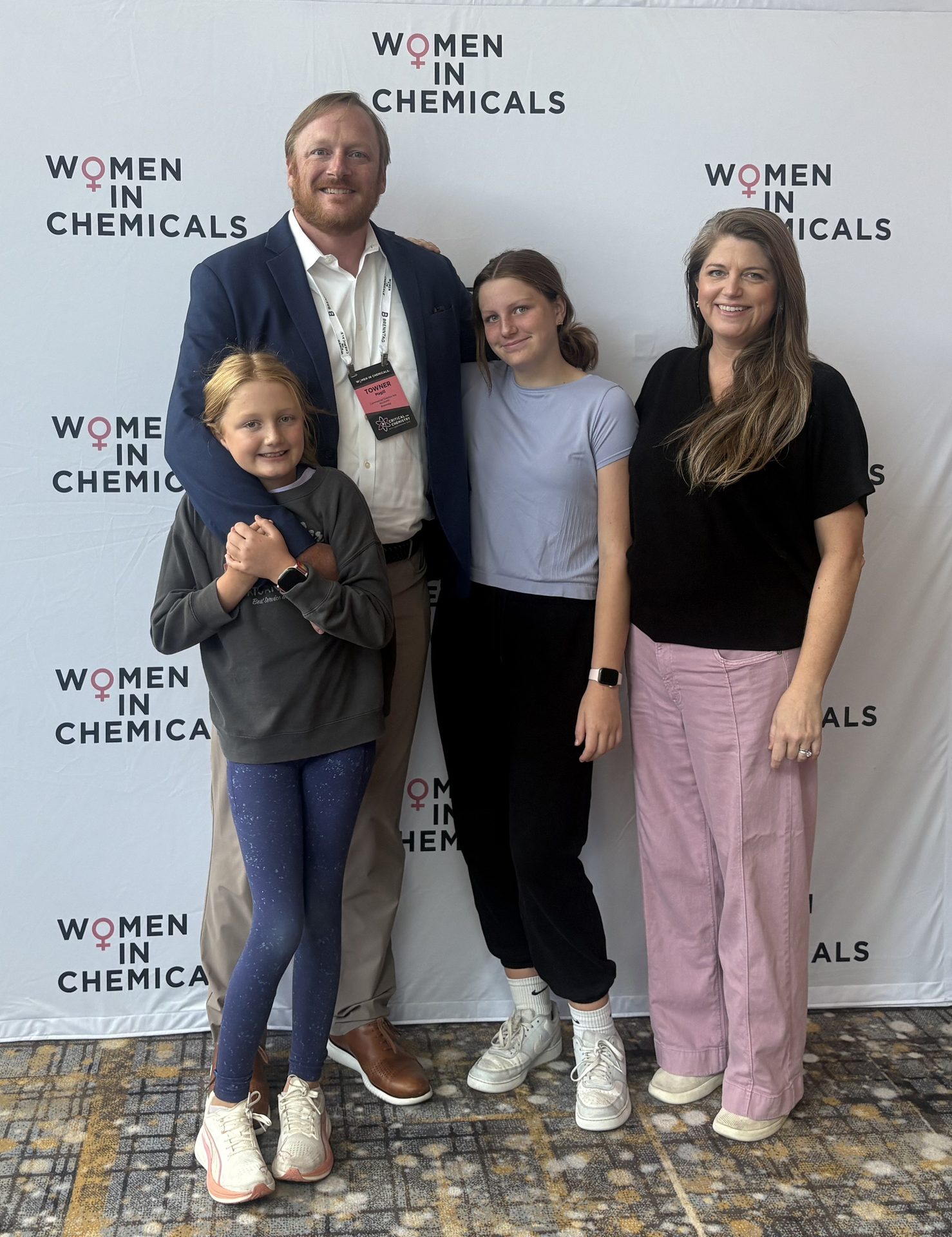
The conference was very personal for me in another way as I was fortunate to be able to include my daughters, ages 12 and 9, as attendees for a few sessions on the final day. I wanted them to see what was possible for them in their future career path and development. While I’m certain they didn't fully grasp the impact and intention of the conference during their short visit, I am confident they recognized the vastly different feeling and empowerment of being in a room entirely filled with women. Spending time hearing impactful speakers and panel discussions and listening to the lived experiences of numerous women I met throughout the three-day event, I can reflect on experiences that will make me an even better father to my two girls as they continue to grow into women themselves.
My reason for wanting to attend the Women in Chemicals Conference was twofold. Selfishly, I was interested in facilitating my continued growth as a leader and manager. However, I also wanted to be an example to encourage and inspire other men to get engaged and involved with Women in Chemicals. Over the course of the three-day Conference, I also found myself curious about some of the other male attendees and their intentions. In catching up with some of my fellow male ally attendees, one statement that struck me in particular came from Joe Redfearn, Managing Director at Bramhall & Co. Joe shared, “At my level, opting out of these conversations isn’t neutral. It’s a decision that reinforces the status quo.” As a sponsor of Women in Chemicals, Joe could simply send his check to the organization and call it a day, but instead he chooses to bravely show up and be part of the conversation, part of the change. He chooses to lead by example and be part of the solution.
Fellow male leaders who also attended shared a common experience. We all came to the conference prepared to listen and left with a deeper awareness of how influence, decision-making, and long-standing industry norms can unintentionally create barriers for women. We all shared similar sentiments and it was captured best by fellow attendee Kobi Gulersen. Kobi is Vice President of Kobitex, a multi-generational family-owned chemical distributor based in Toronto and a first-time attendee at the conference. He said “What surprised me was how consistent the experiences of women working in the industry were across companies and roles. This wasn’t isolated or anecdotal, it was patterned.”
Credit: Women in Chemicals
To change the chemical industry and the experiences of women working in it, we must challenge the status quo. This is where allyship is the most impactful and necessary. This is where showing up to this event and being part of the conversation becomes so important.
Allyship is often misunderstood as outwardly visible support or vocal advocacy. Conversations at the conference consistently pointed to something more practical. Allyship shows more in decisions, particularly everyday leadership choices that determine who is seen and heard, who is supported, and who is given room to grow. This idea of access came up repeatedly. Matt Harman, Executive Consultant for Chemicals at Morgan Latif described it as “supporting women in the same way you support men. That means not singling them out, but ensuring they have the same voice, platform, and visibility. It is about embedding equality into daily interactions, being aware of unconscious bias, and avoiding decisions, comments, or behaviors that could undermine or diminish someone. Fundamentally, it is about helping to elevate people through their work.” Allyship is a leadership responsibility of ensuring equal access to who is invited into key conversations, who is trusted with stretch opportunities, and whose potential is actively advocated for, are all signals that shape careers long before formal promotion decisions are made. Challenging the status quo can be scary, especially in an old school industry like chemicals. Speaking to the other men in attendance, we acknowledged that missteps can and will happen but agreed this should not discourage men from involving themselves in the conversation.
It's been a challenging few years in the chemical industry, and that was certainly recognized during interactions at the conference. Hearing from several leaders across the industry, the shifts in this ever-changing industry were all evident. When it comes to the advancement of women, the industry is making progress but it must move faster. As Redfearn noted in our conversation, the chemical industry is competing with a wide range of other sectors for top talent, many of which are already perceived as more inclusive and forward-looking. When advancement processes are slow, the risk is both persistent inequity and losing high-potential talent to industries better aligned with their expectations and needs. As Redfearn put it, “We’ve made progress in talking about inclusion, but we’re still far less consistent when it comes to changing the processes that determine who advances and who doesn’t.”
The experiences shared at the Women in Chemicals Conference emphasize a reality our industry cannot ignore. Companies that limit access to leadership roles limit their own potential, and possibly even their ability to compete in the future. Allyship in the chemical industry is not a one-time commitment, it is a necessary leadership practice that must be exercised in everyday decisions about access, opportunity, and advancement. The experience at the Women in Chemicals Conference made clear that progress depends on more than awareness, and that men are not only needed in the room, but they can also benefit greatly from being there. The conversation continues, and those willing to lean in will play a meaningful role in shaping a stronger, more competitive industry.