Focus On: Additives
Monthly spotlight centered on a key industry topic.
Additives Shift Toward Multifunctional and Nanomaterial-Driven Performance
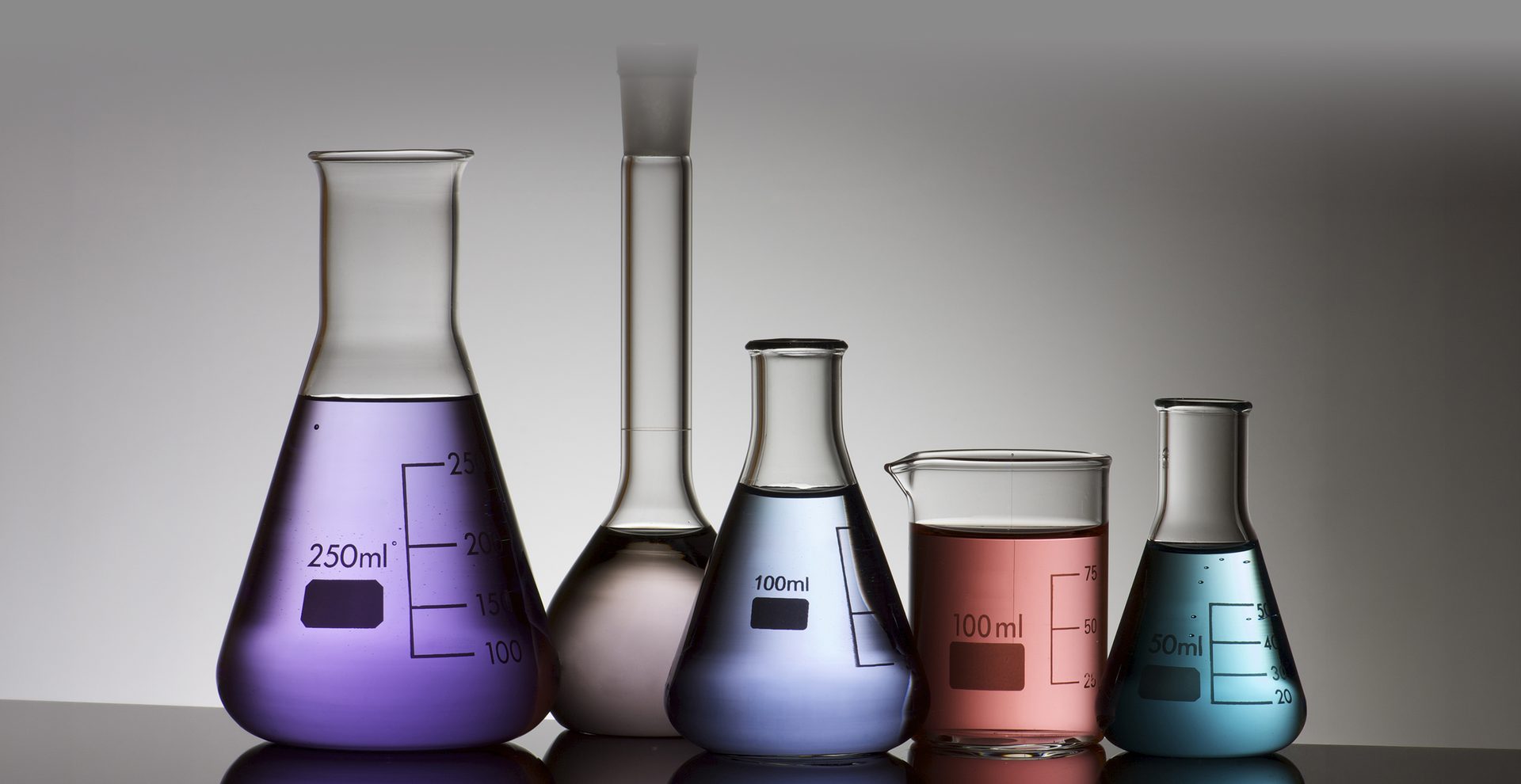
Credit: pedrosala / iStock via Getty Images Plus
By Courtney Bassett
Chief Editor, Paint and Coatings Industry Magazine
Additives Advance Across Graphene, Nanotechnology and Multifunctional Design
Recent developments across industry announcements and academic research indicate that additives are evolving beyond single-function performance toward multifunctional, nanomaterial-enabled and sustainability-driven solutions.
Graphene Additives Move Toward Commercial Coatings Use
According to a report from Sparc Technologies, the company has entered into a letter of intent with HydroGraph Clean Power to evaluate the use of its Fractal Graphene within Sparc’s ecosparc additives for protective coatings.
The company reported that initial testing in water-based systems demonstrated performance benefits, prompting further validation in solvent-based coatings using ISO 12944 cyclic corrosion testing up to 4,200 hours. Sparc indicated that, subject to successful results, the parties intend to pursue a commercial supply and collaboration agreement focused on corrosion-resistant coatings.
The report notes that the work builds on more than six years of R&D on ecosparc graphene-based additives, with additional field trials underway across multiple corrosive environments.
The companies indicated the material is being evaluated as a potential drop-in additive within existing formulations, targeting improved corrosion resistance without requiring significant reformulation.
RDY to Shape the Future: Breaking the Formulator’s Trilemma

The RDY additives range delivers compliance without compromise, high performance without hazardous chemistries, and sustainable coating solutions that balance durability, efficiency and cost across diverse industries.
Nanoparticle Additives Expand Functional Coating Capabilities
Academic research published in Scientific Reports examined the use of silver nanoparticles in water-based acrylic coatings.
The researchers reported that nanoparticles could be synthesized in situ within the polymer matrix without disrupting core functional groups, allowing the coating to maintain its structural integrity while introducing antimicrobial functionality. The study found strong antibacterial performance against both gram-negative and gram-positive bacteria, along with antifungal activity across multiple strains.
The authors also reported improved adhesion performance at optimized formulation concentrations, indicating potential applicability across a range of substrates.
The study suggests a broader shift toward integrated functional additives, where performance is incorporated into the coating structure rather than added as a separate component.
Multifunctional Additives Gain Momentum in Formulation Design
According to a recent market report, manufacturers are developing silicone-based additives that combine slip, leveling and defoaming properties within a single formulation.
Recent product developments include silicone-based additives designed to improve wetting, dispersing and anti-foaming performance, enhancing surface finish and reducing defects in coatings and inks.
Check out the Azelis CASE Customer Portal

The U.S. CASE Customer Portal allows consumers to access the company’s formulations, products, and related documentation online. Sections on the site also include “Inspiration”, where the company’s chemists share their knowledge, and “Problem to Solve,” which focuses on the challenges to the industry as a whole. Learn more from Azelis.
The report indicates that these multifunctional materials are designed to improve coating performance and processing efficiency while reducing formulation complexity. Additional developments cited in the report include low-VOC and environmentally compliant silicone additives, as well as heat-resistant materials designed for use in electronics and automotive applications.
Additives Market Growth Driven by Performance and Sustainability Demands
A separate market analysis reports that coating additives continue to play a central role in enhancing durability, corrosion resistance, weatherability and surface performance across architectural, industrial and automotive coatings.
According to the report, growth is being driven by demand for high-performance coatings and increasing regulatory pressure related to VOC emissions, which is accelerating the development of water-based and environmentally compliant additive systems.
The report also highlights continued development of additive chemistries such as rheology modifiers, dispersants, defoamers and UV stabilizers, along with increasing interest in multifunctional and nanotechnology-enabled systems.
The report also points to strong demand in construction and infrastructure, where coatings require improved weather resistance and long-term durability. Industrial and automotive applications continue to adopt advanced additive technologies to enhance corrosion resistance, scratch resistance and processability. Growth is also supported by expanding use in marine and packaging applications, along with increasing investment in sustainable and multifunctional additive systems.
Thinking About Replacing PFAS in Your Formulation?
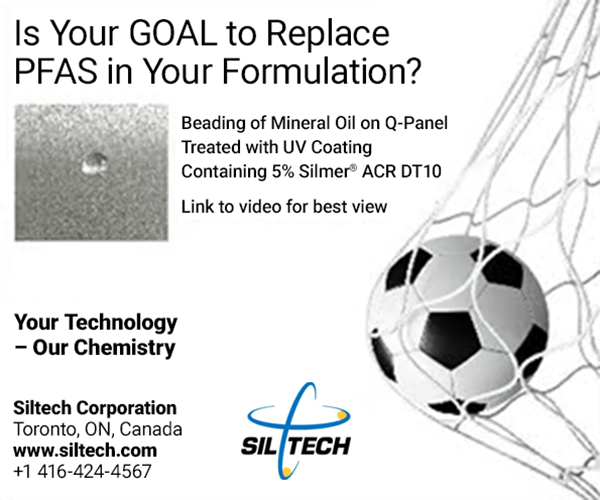
Silicone-based compounds reduce surface tension to 20 mN/m, provide water/glass contact angles of 115˚, and, based on new data, can offer oil repellency. Based on these properties, silicone compounds are a natural fit for many PFAS applications.
Recent PCI Coverage Highlights Additives Innovation Across Sustainability and Performance
Recent coverage from PCI reflects many of the same trends shaping current additive development. Articles published across late 2025 and into 2026 highlight increasing focus on biobased additives, including citrate esters and xanthan gum systems designed to reduce VOC content while maintaining coating performance. Additional reporting has examined plant-based corrosion inhibitors as alternatives to traditional systems, as well as PFAS-free surface additives and silicone-based technologies aimed at improving surface properties while meeting evolving regulatory requirements.
PCI coverage has also explored formulation-level optimization through additive selection, including the role of open-time-extending additives in balancing wet edge, viscosity and gloss in architectural coatings. At the same time, reporting continues to highlight the shift toward multifunctional additive systems that combine antimicrobial, hydrophobic and durability performance within a single formulation component.
Additives Evolve Toward Integrated High-Performance Systems
Across both industry reporting and academic research, the direction of additive development is becoming more defined. Graphene-based initiatives, nanoparticle-enabled coatings and multifunctional silicone additives all point toward coating systems that rely on fewer components, improved durability and more integrated performance within the film.
Gehring Montgomery Introduces New Line of Wax Emulsions and Dispersants
Provalux™ wax emulsions and Disper-Aid™ dispersants deliver optimized particle size distribution, enhanced surface modification, improved pigment wetting, and formulation stability. Designed for waterborne systems, they provide consistent performance, compatibility, and processing efficiency across coatings and industrial applications.